May 11th, 2022
 When most people think about orthodontics, they imagine teenagers getting their first set, or adults who want to correct their smiles later in life. Rarely does the thought take you to a child who still has some baby teeth in their mouths. With that in mind, it may surprise you to learn that some developmental problems are best treated at any early age, often in two separate phases.
What is Two-Phase orthodontic treatment?
Two phase orthodontic treatment refers to a specialized process combining tooth straightening along with physical and facial changes. The purpose of this approach is to take advantage of unique opportunities your child’s growing facial structure provides. Because they are growing rapidly, children benefit enormously from orthodontic appliances that modify the relationship between upper and lower jaws, balance the face and develop room for erupting teeth.
Phase One
The phrase “timing is everything” is relevant in a lot of situations, including planning orthodontic treatment for your children. When working towards a straighter, healthier smile, the first step should be an initial comprehensive evaluation with an experienced orthodontist like Dr. Stephen Godwin. The American Association of Orthodontists recommends that all children have their first orthodontic consultation by the age of seven to determine if there is a problem that would benefit from early treatment, and we agree. Early evaluation gives us the chance to find and diagnose many common dental issues before they have a chance to become more serious and require more intensive treatment.
This early intervention consists of a first phase of treatment when both permanent and baby teeth are present. Phase One treatment involves the patient's muscles and jaws more than the teeth, although some concerns regarding tooth positioning may be addressed. The goal of this first phase of treatment is to create the healthiest environment possible for the eruption of permanent teeth. It is not intended to eliminate all future orthodontic needs. Catching and treating conditions such as jaw discrepancies or overcrowding issues early-on is the most effective way to achieve lasting results.
First phase treatment is indicated in cases of:
- Severely protruding upper teeth
- Severe crowding
- Crossbites
- Lower teeth impinging on the roof of the mouth
- Openbites
- Jaw disharmony
- Teeth not erupting and/or erupting out of normal position
Phase Two
The second phase is where everything begins to come together. Phase-Two treatment, when warranted, will usually be initiated once your child’s permanent teeth have erupted, typically around age 11 or 12 . The second orthodontic phase involves correction of tooth position, space closure, and other refinements which are important to function and stability. This phase will incorporate treatments that will look more familiar, such as full upper and lower braces.
Some of the major advantages of two-phase treatment are:
- Reduces the need to remove permanent teeth
- Improved self-image during the formative years
- Lessens the risk of tooth fracture
- Improves ability to bite and chew
- Often decreases the time required in full braces
- Improves speech development
If you have concerns about your child's dental development, call Bel Air Orthodontics at 410-838-2244 to schedule a complimentary initial examination with Dr. Stephen Godwin or contact us through our website here. Together, we will help your child develop safely and properly, so they can have the most attractive and functional smile possible. For additional information on two-phase orthodontic treatment visit our website.
April 7th, 2022
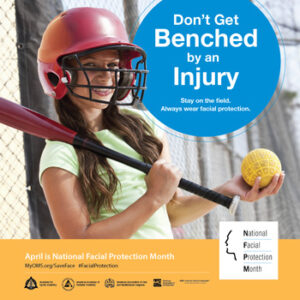 April is National Facial Protection Month, and the team at Bel Air Orthodontics want to remind parents, coaches and athletes to play it safe as they prepare to suit up for both recreational and organized sports. Whether at practice, at a game, or simply enjoying some fun in the neighborhood, a sports-related injury can happen in an instant. That's why it's important to take precautions to protect your face and teeth from injury. Dr. Godwin suggests you take these simple steps to prevent injuries so you can stay in the game:
- Wear a mouth guard when playing contact sports; if you have braces, make sure you use a mouth guard designed specially for orthodontic patients;
- Wear a helmet. Helmets reduce of risk of head injury by absorbing the energy of an impact.
- Wear protective eye wear. According to the Coalition to Prevent Sports Eye Injuries, protective eye wear designed specifically for the sport can prevent more than 90 percent of all eye injuries;
- Wear a face shield to avoid scratched or bruised skin;
- Be alert - as a player or spectator!
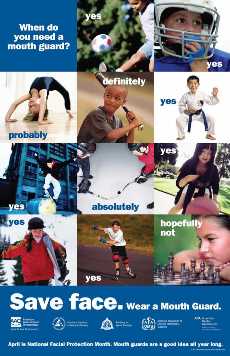 Did You Know? . . .
- Athletes who don't wear mouth guards are 60 times more likely to damage their teeth. Mouth guards are particularly important if you are in orthodontic treatment. A minor blow to the face can be uncomfortable if you don't have braces; but add metal to the mix and a minor blow to the face can leave you with abrasions and cuts inside your mouth from your soft tissue being pressed against the brackets and wires on your teeth;
- Sports-related injuries are the leading cause of emergency room visits in children ages 12 to 17 according to the Center for Disease Control;
- Whatever your sport, the right protective gear can save your teeth, your face, and even your life. If you or your child suffers dental trauma such as a knocked-out or broken tooth, Dr. Godwin suggests that you contact your dentist for immediate attention. For those in braces, it's also important to contact our office to schedule an appointment for repair since damage to braces can lengthen treatment time and affect treatment results.
About National Facial Protection Month: Every April, the American Association of Orthodontists, the American Dental Society, the Academy for Sports Dentistry, the American Association of Oral and Maxillofacial Surgeons, and the American Academy of Pediatric Dentistry team up to remind parents, coaches and athletes about the importance of taking precautions to preserve their teeth and protect them from facial injuries.
March 22nd, 2022
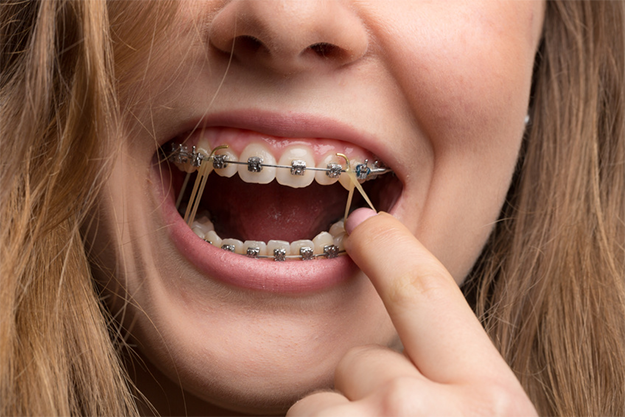
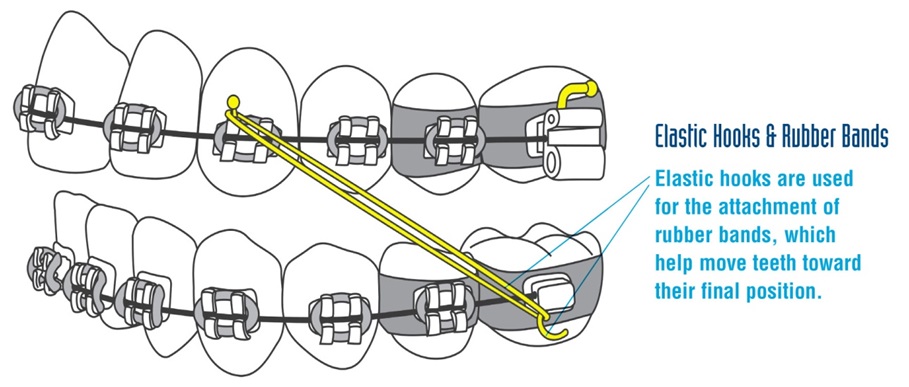
It is not unusual for elastics (a.k.a. rubber bands) to be prescribed as part of your orthodontic treatment when you are wearing braces. Your braces, which consist of brackets and wires, work by gently applying pressure to the teeth, and that pressure causes them to move into the correct position. In some cases, elastics are placed on your braces in strategic places in order to apply additional pressure.
How Elastics Work
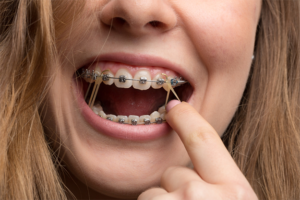 Customized for each patient, the elastics typically stretch over tiny loops on the top and bottom brackets. When worn as prescribed, these tiny elastics will apply the gentle and steady pressure needed to guide your teeth into the desired position and align one arch to the other. Without the use of these elastics, you may not be able to achieve the results you want, or you may have to wear braces for a longer period of time.
The Do's and Don'ts
Elastics must be worn as prescribed, and patient cooperation is essential to a successful outcome. Here's how you can do your part:
- DO - Change your elastics at least once a day. Remember to always wash your hands before removing and replacing the elastics;
- DON'T - Double up on elastics as this will cause too much pressure on the tooth or teeth and can actually harm the root of the tooth;
- DO - Get in the habit of carrying around an extra bag of elastics and replace them as soon as one breaks. By consistently wearing your elastics, you may shorten the overall time needed to wear braces;
- DON'T - Guess how they should be worn. If you are unsure where to place the elastics, call our office immediately so that we can help you get your elastics placed correctly;
- DO - Remove your elastics when eating and brushing your teeth, but remember to replace them when you are done.
- DON'T - Overstretch or overuse the same elastics or they will lose their strength and will be ineffective. You can avoid this by changing your elastics daily.
- DO - Call us immediately if you lose or run out of elastics. Please do not wait until your next regularly scheduled visit.
- DON'T - Forget to wear them consistently, as directed. By wearing your elastics exactly as prescribed, you will get better, faster, and more comfortable results. Generally, any discomfort from the elastics will disappear within a day or two, so hang in there.
- DO - Have fun with your braces and elastics. Elastics come in many different colors, so pick your favorite colors and show off your gorgeous smile!
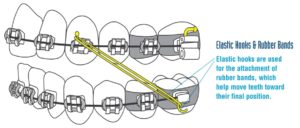 Elastics are a key part of your orthodontic treatment, and learning how to remove and replace them correctly is an important part of your treatment. Before we send you on your journey to a happy, healthy smile, we'll make sure you understand all there is to know about taking care of your braces. Of course, if you have any questions about your orthodontic treatment, be sure to give the team at Bel Air Orthodontics a call.
March 9th, 2022
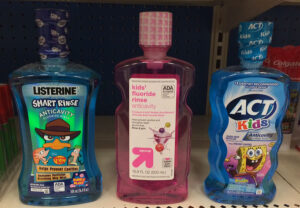 There are so many ways you can protect your teeth throughout your orthodontic treatment. We recommend you brush your teeth at least two times per day, floss regularly and protect your mouth and appliances from damage by making smart food choices. But did you know there is another, often forgotten, way to keep your teeth clean and healthy during your treatment? Fluoride, a mineral found in your water and many dental products can keep your teeth strong.
What is Fluoride And How is It Used?
Fluoride is a mineral that helps prevent cavities and tooth decay. It comes in two varieties: topical and systemic. Topical fluorides are applied directly to the tooth enamel. Some examples include fluoride toothpastes and mouth rinses, as well as fluoride treatments at your dentist's office. Systemic fluoride is swallowed and benefits the teeth before and after they erupt in the mouth. Examples include fluoridated water and dietary fluoride supplements.
The topical fluoride preparation used in the dental office is a much stronger concentration than that in toothpastes or mouth rinses that are available at your local pharmacy. A fluoride treatment typically takes just a few minutes. After the treatment, patients are asked not to rinse, eat or drink for at least 30 minutes in order to allow the teeth to absorb the fluoride. Your dentist may also prescribe a fluoride product such as fluoride gels or antibacterial mouth rinses. Dentists have used in-office fluoride treatments for decades to help protect their patients' oral health; so if you have questions about fluoride treatments and their benefits, don't hesitate to ask the team at Bel Air Orthodontics or your general dentist.
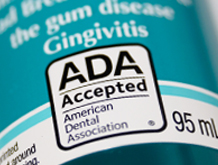 Look For The American Dental Association's Seal of Acceptance.
When choosing your own over-the-counter fluoride products, be sure to check for the American Dental Association's (ADA) seal of acceptance. Products marked with the ADA seal of approval have been examined carefully by the ADA's Council on Scientific Affairs and have met it's criteria for safety and effectiveness. Take care of your teeth and share your beautiful smile!
 When most people think about orthodontics, they imagine teenagers getting their first set, or adults who want to correct their smiles later in life. Rarely does the thought take you to a child who still has some baby teeth in their mouths. With that in mind, it may surprise you to learn that some developmental problems are best treated at any early age, often in two separate phases.
 April is National Facial Protection Month, and the team at Bel Air Orthodontics want to remind parents, coaches and athletes to play it safe as they prepare to suit up for both recreational and organized sports. Whether at practice, at a game, or simply enjoying some fun in the neighborhood, a sports-related injury can happen in an instant. That's why it's important to take precautions to protect your face and teeth from injury. Dr. Godwin suggests you take these simple steps to prevent injuries so you can stay in the game:
 There are so many ways you can protect your teeth throughout your orthodontic treatment. We recommend you brush your teeth at least two times per day, floss regularly and protect your mouth and appliances from damage by making smart food choices. But did you know there is another, often forgotten, way to keep your teeth clean and healthy during your treatment? Fluoride, a mineral found in your water and many dental products can keep your teeth strong.