Our Blog

What Is Two-Phase Orthodontic Treatment?

March 25th, 2019

Although we can treat dental problems at any age, some developmental problems are best treated in two separate phases. That's why we follow the American of Association's recommendation that every child have an orthodontic evaluation at age seven. Two-phase treatment is a very specialized process designed for young children.  Because they are growing rapidly, children benefit enormously from orthodontic appliances that modify the relationship between upper and lower jaws, balance the face and develop room for erupting teeth.

Some of the major advantages of two-phase treatment are:

  • Reduces the need to remove permanent teeth
  • Improved self-image during the formative years
  • Lessens the risk of tooth fracture
  • Improves ability to bite and chew
  • Often decreases the time required in full braces
  • Improves speech development

First phase treatment is indicated in cases of:

  • Severely protruding upper teeth
  • Severe crowding
  • Crossbites
  • Lower teeth impinging on the roof of the mouth
  • Openbites
  • Jaw disharmony
  • Teeth not erupting and/or erupting out of normal position

This early intervention consists of a first phase of treatment when both permanent and baby teeth are present. Phase I treatment involves the patient's muscles and jaws more than the teeth, although some concerns regarding tooth positioning may be addressed.

The goal of this first phase of treatment is to create the healthiest environment possible for the eruption of permanent teeth. It is not intended to eliminate all future orthodontic needs. By starting early, your child has the best chance for good results. When all conditions warrant beginning a second phase of treatment, a re-evaluation is done and the necessary remaining treatment is determined and a plan established. The second orthodontic phase involves correction of tooth position, space closure, and other refinements which are important to function and stability.

If you have concerns about your child's dental development, call Bel Air Orthodontics at 410-838-2244 to schedule a complimentary initial examination with Dr. Stephen Godwin.
Choosing the Right Toothbrush

February 18th, 2019

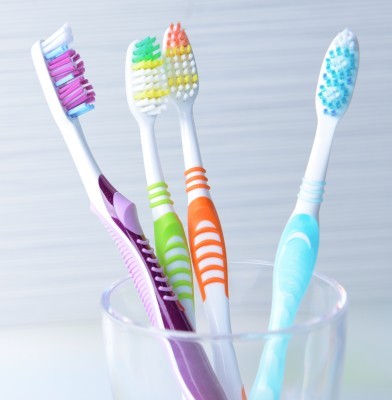
So which kind of toothbrush is right for you? Whether manual or electric, it's important to choose a toothbrush that is appropriate for your age and oral health needs.

Comfort is Key

Make sure you pick a shape and size is most comfortable for you. Naturally, the best toothbrush is one that fits your mouth. The head of the toothbrush should allow you easy access to all your teeth, especially those hard-to-reach molars. A toothbrush that is too large will be cumbersome to maneuver in a smaller mouth, while a toothbrush that is too small won't be as effective in reaching all the surface areas of your teeth.

Bristle Type

A soft-bristle toothbrush is your best bet to achieve a comfortable, safe, and effective teeth cleaning. Medium and hard-bristled brushes can damage your enamel and gums, especially if you tend to be an aggressive brusher.

Powered toothbrushes versus regular brushes

Benefits of Using an Electric Toothbrush

  • Perfect for those with limited mobility to guarantee a good cleaning.
  • Some brands have features that promote better brushing techniques (including a timer, brush intensity meter and more).
  • A better, deeper clean because they are designed to produce more movement and push fluids between the teeth.

To get the most out of an electric toothbrush while wearing braces, choose one with a small head and soft bristles. When brushing, apply gentle pressure and to allow the toothbrush to do the hard work for you. Remember to get around the bands, brackets and wires for a deep clean and healthier gums.

Benefits of Using a Manual Toothbrush

  • It’s simple, affordable and easy to find.
  • Changing your brush every 3 months doesn’t hurt your pockets.
  • Depending on the type of brush and your brushing method, manual toothbrushes could be softer on the tooth enamel and gums.

While an electric toothbrush can make the oral care process more efficient, that’s not to say that manual toothbrushes can’t get the job done. Manual toothbrushes are just as great at cleaning teeth as their electric counterparts, but many people do not use them properly. It is common for those using a manual toothbrush to not brush their teeth long enough to reap its benefits. For the best clean, the American Dental Association recommends brushing for a minimum of two minutes at least twice per day.

Technique

Finding the right toothbrush is the first step in great oral health. The second is ensuring that you're using the right brushing technique. Placing the toothbrush closer to the gum line and brushing with gentle circular motions for two minutes is important to achieve the best results. Patients in braces should brush for 5 minutes twice a day since food particles can be more difficult to remove around brackets and wires.

Expert Recommendation

Make sure the toothbrush you choose has undergone rigorous safety and effectiveness testing. Look for the American Dental Association's (ADA) seal of approval or consult our team for recommendations on the best type of toothbrush to meet your needs, especially if you are wearing braces.

When in Doubt… Ask!!

If you are still unsure of which toothbrush to choose during orthodontic treatment, contact our office.  Dr. Stephen Godwin and the team at Bel Air Orthodontics will work with you to suggest a toothbrush that fits both your lifestyle and the appliances you are wearing so that you can achieve the bright, healthy smile you deserve.

Flossing Buddies For Braces

February 6th, 2019

February is National Children's Dental Health Month, and the team at Bel Air Orthodontics want to remind everyone about the importance of good oral hygiene and the role it plays in the health of your teeth and the success of your orthodontic treatment.

Brushing for two minutes, two times a day is the golden rule when it comes to taking care of your teeth; but did you know that brushing alone isn't enough to keep your mouth clean and disease free? The gum tissue between your teeth where your toothbrush can't reach is prone to infection. That's why flossing regularly is just as essential to your overall health care as brushing. The American Dental Association (ADA) suggests flossing at least once a day to promote total oral health.

Flossing With Braces

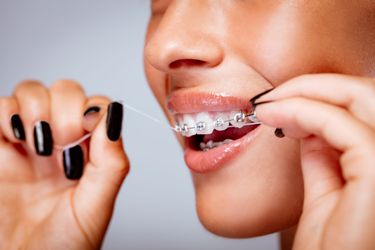
Flossing is more important that ever when you're in orthodontic treatment. Braces can catch food and allow plaque to build up around them, increasing the risk of gum disease. Flossing removes plaque from the areas of your teeth that your toothbrush can't reach. If you don't remove this plaque, it can harden into tartar and lead to gum inflammation and disease. Fortunately there are products to help you successfully floss around and between your braces. Here are some handy helpers that make it easier to floss while you're in treatment:

Floss Threaders

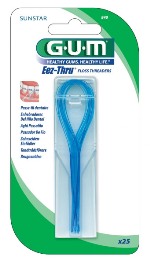
A floss threader is the most common tool to help you floss with braces. Made of a special, rigid plastic, a threader works like a sewing needle to help you guide the floss under the archwire so that you can floss as usual. Here's how it works:

  1. Pull off 12 to 18 inches of your preferred dental floss.
  2. Insert one end of the dental floss about five inches into the loop of the threader.
  3. Pass the floss threader under or over the archwire.
  4. Remove the threader from the floss and floss gently back and forth and up and down into the gumline between the teeth.
  5. Repeat the process between each tooth.

Stiff-Ended Floss

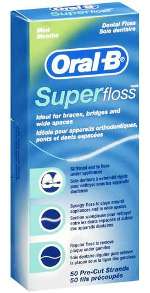
Made with a bendable but rigid segment at its end, this special floss works much the same as a floss threader. Products such as Oral-B's Super Floss have three unique components—a stiffened-end dental floss threader, spongy floss and regular floss.

Simply maneuver the stiff end under the archwire of your braces, pull it through and floss as usual. All three flossing tools work together to give you maximum benefits.

Oral Irrigators

An oral irrigator, such as a Waterpik®, works by shooting a very fine jet of water between and around teeth to clear away plaque and food. This system can make cleaning around your braces much easier and more thorough. Dr. Godwin and the team at Bel Air Orthodontics highly recommend the use of an oral irrigator throughout your orthodontic treatment.

Regardless of the type flossing tool you use, make sure that you floss on a regular basis - at least once a day. Though flossing may add one more step to your daily routine, it's just as important to achieving a healthy smile as brushing. As always, let us know if you have any questions about the best way to keep your teeth clean and healthy while you're in treatment.

Your Pal, Fluoride

January 28th, 2019

There are so many ways you can protect your teeth throughout your orthodontic treatment.   We recommend you brush your teeth at least two times per day, floss regularly and protect your mouth and appliances from damage by making smart food choices. But did you know there is another, often forgotten, way to keep your teeth clean and healthy during your treatment? Fluoride, a mineral found in your water and many dental products can keep your teeth strong!

What is Fluoride And How is It Used?

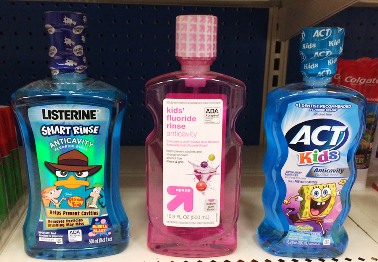
Fluoride is a mineral that helps prevent cavities and tooth decay. It comes in two varieties: topical and systemic. Topical fluorides are applied directly to the tooth enamel. Some examples include fluoride toothpastes and mouth rinses, as well as fluoride treatments at your dentist's office. Systemic fluoride is swallowed and benefits the teeth before and after they erupt in the mouth. Examples include fluoridated water and dietary fluoride supplements.

The topical fluoride preparation used in the dental office is a much stronger concentration than that in toothpastes or mouth rinses that are available at your local pharmacy. A fluoride treatment typically takes just a few minutes. After the treatment, patients are asked not to rinse, eat or drink for at least 30 minutes in order to allow the teeth to absorb the fluoride. Your dentist may also prescribe a fluoride product such as fluoride gels or antibacterial mouth rinses.   Dentists have used in-office fluoride treatments for decades to help protect their patients' oral health; so if you have questions about fluoride treatments and their benefits, don't hesitate to ask the team at Bel Air Orthodontics or your general dentist.

Look For The American Dental Association's Seal of Acceptance.

When choosing your own over-the-counter fluoride products, be sure to check for the American Dental Association's (ADA) seal of acceptance. Products marked with the ADA seal of approval have been examined carefully by the ADA's Council on Scientific Affairs and have met it's criteria for safety and effectiveness. Take care of your teeth and share your beautiful smile!